
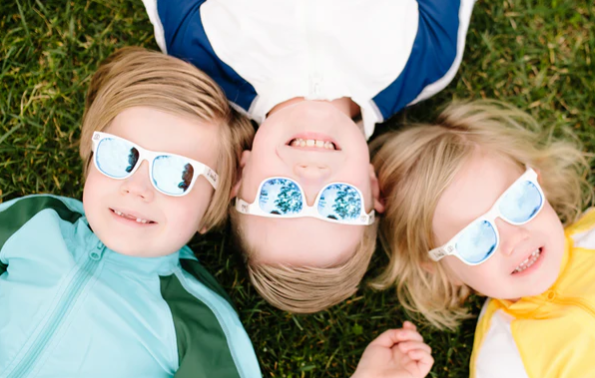
Polarized vs UV-protection sunglasses
Your kids are splashing in the pool. The sun reflects off the water, making everything blindingly bright. You hand them sunglasses, but are their eyes actually protected?
UV protection blocks harmful rays that damage the eyes over time, while polarization cuts glare from water and other reflective surfaces. They're not the same thing, and knowing the difference helps you choose the right sun-protective sunglasses for your family.
☀️ Shop SwimZip's sun-protective sunglasses with UV 400 protection for complete UVA and UVB defense.
Polarized vs UV protection at a glance
|
UV protection |
Polarization |
|
|
Blocks UVA/UVB rays |
✅ |
Only if UV-coated |
|
Reduces glare from water/surfaces |
❌ |
✅ |
|
Prevents long-term eye damage |
✅ |
❌ |
|
Enhances visual clarity in bright conditions |
❌ |
✅ |
|
Essential for kids at pool/beach |
✅ |
Nice to have |
|
Works with phone/tablet screens |
✅ |
May be hard to see |
|
Available in SwimZip styles |
✅ |
Anti-reflective coating available |
Polarization is comfort. UV protection is safety. You want both when possible, but if you have to choose, always pick UV protection first.
About UV protection

UV stands for ultraviolet. It’s the invisible light rays from the sun that penetrate your eyes and cause damage you can't see or feel. There are two types that matter:
- UVA rays age the eye's internal structures.
- UVB rays burn the surface tissues.
Over a lifetime, UV exposure increases the risk of cataracts, macular degeneration, and even eye cancer. Kids face a higher risk than adults. Since they spend more time outdoors, their eyes are still developing, and they're less aware of sun damage.
🕶️ Protect your kids with our White Wayfarer sunglasses for full UV defence and stylish, anti-reflective blue lenses.
UV 400 is the gold standard. This rating means the lenses block all light rays up to 400 nanometers, covering both UVA and UVB. When you see "100% UV protection" or "UV 400" on sunglasses, you’re getting the protection you and your family need. These are the best sunglasses for eye health because they create a true barrier against radiation.
Note: Dark lenses don't equal UV protection. Dark-tinted lenses without UV coating can actually be worse than no sunglasses at all. Your pupils dilate in the darkness, allowing more UV rays to enter and damage your eyes.
About polarization
Polarized sunglasses contain a lens filter that blocks horizontal light waves while allowing vertical waves. When sunlight bounces off water, sand, snow, or car hoods, it reflects in horizontal patterns that create intense glare.
The polarized filter acts like a Venetian blind, cutting glare and improving visual clarity. Colors look more vivid, details are sharper, and you squint less. If you've ever tried to watch your kids swim in a bright pool and couldn't see clearly because of the water's glare, your life will be easier with polarized lenses.
Polarized lenses are common features of activity-specific sunglasses for:
- Boating
- Fishing
- Driving
- Beach volleyball
- Any other sport near water.
But polarization has limitations. The same filter that blocks glare can interfere with LCD screens on phones, tablets, and some car dashboards. You might see strange rainbow patterns or darkened areas on screens. Some people find this annoying, especially when trying to take photos or check their phone at the beach.
Choose the right sunglasses for your family
Start with UV 400 protection. This is the baseline for any pair of sunglasses worth buying. Check the label or product description; it should say "100% UV protection," "UV 400," or "blocks 100% of UVA and UVB rays."
Add polarization if you and your kids spend significant time fishing or doing anything that requires looking into the water. For casual pool days and playground visits, standard UV-protected lenses are fine.
You also want a wide frame. Look for wraparound styles or frames with good side coverage to block stray UV rays that sneak in from the edges. And for active kids, go with bendable frames.
Check that frames are BPA-free and safe for kids. SwimZip's entire swimwear accessories line meets this standard, so you don't have to worry about harmful materials touching your child's face.
Replace sunglasses when they get scratched or after heavy exposure to chlorine or saltwater. Coatings degrade over time, especially with pool chemicals and ocean water. If lenses are visibly damaged, the UV protection may be compromised.
Stay sun-safe from head to toe with SwimZip

😎 Browse SwimZip's sun-protective sunglasses for durable UV 400 protection. Available in multiple sizes for toddlers through teens.
⛱️ The best sun protection combines quality sunglasses with comprehensive skin coverage. Pair sunglasses with our UPF 50+ swimwear for complete family sun-protection, style, and comfort.
Sunglasses FAQ
Should I get polarized sunglasses for my toddler?
UV 400 protection is the priority for all ages. Polarization helps reduce glare, which is nice for comfort, but it's not needed for casual pool or playground use. For toddlers who spend time near water during peak sun hours, polarization can help reduce squinting and eye strain.
Which is better, polarized or UV protection?
UV protection is better because it prevents long-term eye damage from harmful radiation. Polarization improves comfort by reducing glare. If you have to choose one, pick UV protection. You can also find sunglasses with both.
Is 100% UV-protected the same as polarized?
These are different features. "100% UV protection" (or UV 400) means the lenses block harmful ultraviolet radiation. "Polarized" means the lenses have a filter that reduces glare from reflective surfaces. A lens can have one, both, or neither of these features.
What are the disadvantages of polarized glasses?
Polarized lenses can harm your eyes if they aren’t also UV-protective. They allow you to keep your eyes wide open in bright conditions, which is bad for your eyes if UV rays are still penetrating the lenses.
Polarized lenses can also make it harder to see LCD screens (phones, tablets, some car dashboards). They may also make it difficult to see patches of ice on roads.
How do I clean my sunglasses?
You can clean your sunglasses at home with minimal equipment.
- Use lukewarm water and a drop of dish soap to gently clean lenses.
- Rinse and dry with a microfiber cloth; never use paper towels or clothing, which can scratch the coating.
- Avoid household cleaners or ammonia-based products that degrade UV protection.
Store sunglasses in a protective case when not in use.
How do I remove scratches from sunglasses?
You can remove minor scratches from sunglasses with at-home or professional remedies. Minor surface scratches can sometimes be buffed out with a microfiber cloth and a small amount of non-abrasive toothpaste or baking soda paste. Rub gently in circular motions, then rinse and dry. However, deep scratches that reach the UV coating cannot be repaired, since the protective layer is compromised.

Leave a comment
This site is protected by hCaptcha and the hCaptcha Privacy Policy and Terms of Service apply.