
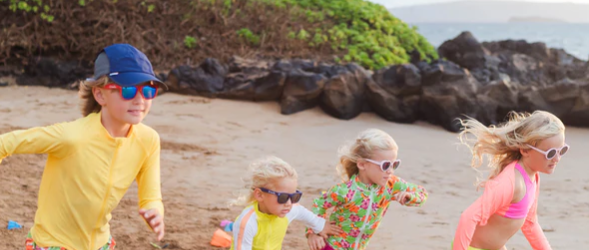
What are the best sunglasses for eye health?
The sun's UV rays contribute to cataracts, macular degeneration, and even skin cancer on your eyelids. Instead of just picking a pair of sunglasses that matches your swimsuit, choose a pair that protects your eyes. The best sunglasses for eye health block UV rays and help you safely perform outdoors. And yes, you can find a pair that goes with your outfit.
SwimZip makes UPF 50+ swimwear for men, women, and children of all ages.
How UV radiation damages your eyes
Ultraviolet radiation is invisible light from the sun that penetrates clouds and reflects off water, snow, and concrete. Three types exist: UVA, UVB, and UVC. The Earth's atmosphere blocks UVC rays, but UVA and UVB rays reach your eyes and cause immediate and long-term damage.
UVA rays penetrate deep into the eye and damage the macula, which controls your central vision. UVB rays primarily affect the lens, which determines how clearly you see. Children face even higher risks because their eyes let in more UV light than adult eyes. Studies show that most of their lifetime UV exposure happens before age 18.
UV radiation causes several serious eye problems:
- Cataracts: Clouding of the eye's lens that impairs vision; the World Health Organization estimates 20% of cataract cases stem from UV exposure.
- Macular degeneration: Damage to the retina's central area that controls detailed vision and can lead to vision loss.
- Photokeratitis: A sunburn on your cornea that causes pain and temporary vision problems; commonly known as snow blindness after ski trips.
- Pterygium: Tissue growth on the white of the eye that can eventually affect vision if left untreated.
- Pinguecula: Yellowish patches on the conjunctiva caused by UV exposure and eye irritation.
- Eyelid skin cancer: Malignant growths on the delicate skin around your eyes from cumulative sun damage.
- Corneal damage: Long-term degradation of the eye's surface layer from repeated UV exposure.
These conditions can be quite serious, but they're largely preventable. UV-protective sunglasses block damaging radiation and protect your eyes—if they have the right features.
Eye protection sunglasses features

Some features matter more than others when it comes to blocking harmful radiation. In most cases, you can find sunglasses that combine features for protection and specialized performance.
UV protection
This is the must-have feature in any protective pair of sunglasses. Look for pairs labeled "100% UV protection" or "UV400." These terms mean the lenses block all ultraviolet rays up to 400 nanometers, covering UVA and UVB radiation.
UV protection has nothing to do with lens color, despite what many people think. Actually, dark lenses without UV filtering can harm your eyes more than wearing no sunglasses at all. Your pupils dilate in response to the darkness, letting more UV radiation reach your retina.
You don’t need to spend a lot of money to get UV400 glasses. Inexpensive sunglasses with proper UV400 certification protect your eyes just as well as designer brands. Always check the label rather than assuming quality based on cost.
🕶️ Our Kids’ Wayfarer Sunglasses in Navy boast genuine UV400 protection without the premium price tag.
Lens materials
All lens materials can block UV rays through proper treatment. Glass, acrylic, and plastic lenses need UV treatments to guarantee protection. When shopping, verify UV protection.
Polycarbonate lenses are unique because they block UV radiation naturally without requiring additional treatments. The material itself filters harmful rays up to 400 nanometers, providing built-in UV400 protection. Polycarbonate also resists impact better than other materials, making it the safest choice for children and active adults who need UV defense and shatter resistance.
Besides UV protection, you also want lenses that keep your eyes relaxed. Low-quality lenses become hazy or scratched and cause eye strain. Glass lenses are naturally clear and scratch-resistant. Check that other materials have scratch-resistant coatings.
Polarization
Polarized lenses reduce glare from reflective surfaces, like water, snow, and roads. This feature makes driving safer and water activities more comfortable by cutting harsh reflected light. But polarization doesn't block UV rays.
Polarization is a nice-to-have feature, but you also need UV400 protection to keep your eyes safe. If you’re buying sunglasses for general use, you can skip polarization without putting your eyes at risk.
Learn more about polarized versus UV-protection sunglasses.
Frame design
UV-protective sunglasses only block the area they cover, so you should choose a frame that offers extended coverage. The best designs block direct sunlight and the reflected rays that sneak around the edges of your lenses.
Protection-focused frame styles include:
- Wraparound frames: Curve around the sides of your face to block UV light entering at angles; great for water sports, skiing, and cycling.
- Oversized frames: Cover more area and block peripheral UV exposure while protecting delicate skin around your eyes; think aviators.
- Close-fitting styles: Sit snug against your face to prevent UV radiation from sneaking around lens edges.
- Side-shield designs: Feature extended coverage at the temples to block lateral UV exposure; great for high-UV environments like beaches and ski slopes.
😎 Check out our kids' aviator sunglasses for classic style with 100% UV protection.
Additional protective features
Anti-reflective coatings reduce glare on the back surface of your lenses. This feature improves visual clarity and prevents UV rays from bouncing off the lens back toward your eye.
Scratch-resistant coatings extend the life of your sunglasses and maintain protective quality. Scratched lenses scatter light and may reduce UV blocking effectiveness.
Mirror coatings reflect additional light away from your eyes. These work well in very bright conditions but don't replace proper UV filtering in the lens material itself.
🤓 Keep your lenses in top condition. Learn how to fix scratched sunglasses.
Protecting children's eyes

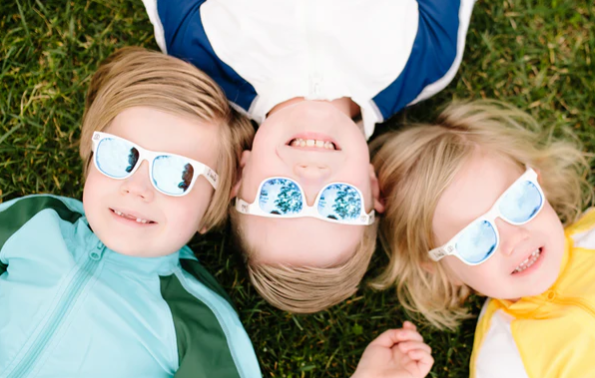
Children's eyes need even more protection than adult eyes. Their developing eye structures filter less UV light naturally, allowing more radiation to reach sensitive tissues.
When shopping for kids’ sunglasses, look for these features:
- Impact-resistant frames and shatterproof lenses
- Proper fit with adjustable features
- 100% UV400 protection
- High-visibility colors
- Comfortable materials
For beach safety, pair sunglasses with high-visibility swimwear that helps you keep eyes on your kids in crowded pools and beaches. SwimZip's kids' sun hats complement eye protection with wide brims that shade faces and provide additional UV defense during all-day outdoor play.
Additional sun safety tips
Sun safety doesn’t stop with your eyes. These practices help you minimize UV exposure and protect your long-term health
- Avoid peak UV exposure: Check today's UV index to understand your daily exposure risk.
- Combine sunglasses with wide-brim hats: Hats block UV rays from above and reduce overall facial exposure. Sun-protective hats pair with sunglasses for comprehensive defense.
- Take extra precautions near water and snow: These surfaces reflect up to 80% of UV rays back toward your eyes, doubling your exposure.
- Wear UPF 50+ clothing: Protect exposed skin on your face, neck, and body with sun-protective swimwear; learn more about UPF clothing benefits.
- Never look directly at the sun: Even with sunglasses, direct viewing can cause retinal damage.
- Apply sunscreen to the eye area: Use sunscreen formulated for sensitive facial skin to protect eyelids and the surrounding areas.
- Replace damaged sunglasses: Scratched or worn lenses lose protective effectiveness; maintain your eyewear properly.
Make sun protection a daily habit. Healthy habits prevent cumulative damage. See our sun protection tips for more family-friendly strategies.
Protect your family's vision with SwimZip
The right sunglasses protect your eyes from UV damage that accumulates over your lifetime. Our children’s sunglasses feature UV400 protection, high-coverage frames, and damage-resistant materials to keep your kids safe and having fun in the sun.
🩳 Pair your eyewear with our UPF 50+ swimwear and wide-brim sun hats for head-to-toe protection during every outdoor adventure.
Eye-health sunglasses FAQ
How can I tell if my sunglasses are 100% UV protected?
Check for labels stating "100% UV protection," "UV400," or "100% protection against UVA and UVB." If you're uncertain about older sunglasses, visit an optical shop with a UV light meter. Most opticians test sunglasses for free in under a minute, confirming whether your lenses block harmful radiation.
Who should not wear polarized sunglasses?
Pilots should avoid polarized lenses because they can make instrument panels harder to read and interfere with seeing through windscreens. Skiers may struggle to see icy patches on slopes. People who frequently read digital screens outdoors might find LCDs appear darker or distorted through polarized lenses.
What are the disadvantages of polarized lenses?
Polarized lenses make it difficult to read LCDs on phones, car dashboards, and ATMs. They can hide icy patches on roads or ski slopes by reducing glare that reveals surface conditions. Polarized sunglasses typically cost more than standard UV-protective lenses and aren't necessary for all activities.
Do darker lenses provide better UV protection?
No. Lens darkness reduces visible light but doesn't affect UV blocking. Dark lenses without UV400 protection can actually harm your eyes more because your pupils dilate in the darkness, letting more UV radiation reach your retina. Always check for UV protection labeling regardless of lens tint.
Are polarized sunglasses better for eye health?
Polarization reduces glare from reflective surfaces but doesn't block UV rays by itself. You need both features for optimal protection. Polarized lenses improve comfort and reduce eye strain in bright conditions, but UV filtering provides the actual health protection.
👀 Learn more about polarized vs. UV protection sunglasses.
How often should I replace my sunglasses?
Replace sunglasses when lenses become scratched, coatings wear off, or frames no longer fit properly. Scratched lenses scatter light and may reduce UV blocking effectiveness. Check your sunglasses regularly for damage and maintain them properly.
👀 Learn how to fix scratched sunglasses.
Further Reading
Does UPF wash out of clothing?
References
Gefeller, O., & Diehl, K. “Children and Ultraviolet Radiation”, Children, vol 9, no 4, 2022, art. 537. https://www.mdpi.com/1582018.
World Health Organization. INTERSUN: The Global UV Project. WHO, 2003. https://www.who.int/uv/publications/Intersun-UVProject.pdf.


Leave a comment
This site is protected by hCaptcha and the hCaptcha Privacy Policy and Terms of Service apply.