

Best toddler boy UPF 50+ swimwear
One severe sunburn in childhood doubles melanoma risk later in life, and toddler boys at the pool or beach rack up UV exposure fast. Protect your boy with high-quality UPF 50+ swimwear that blocks 98% of UV rays (wet or dry) and survives rough play.
🌊 SwimZip makes sun-protective swimwear for boys that carries the Skin Cancer Foundation Seal of Recommendation and features UPF 50+ fabric across every piece.
What to look for in toddler boy UPF 50+ swimwear
Any swimsuit you get should offer UPF 50+ protection. Toddler skin is thinner than adult skin and accumulates UV damage that increases skin cancer risk later in life. One severe childhood sunburn doubles melanoma risk. Sunscreen helps, but it requires reapplication every two hours and is a losing battle with a two-year-old who won't hold still.
Besides UPF 50+, look for these comfort, function, and durability features:
- Full-length front zipper: Zip-front designs eliminate the struggle of pulling wet fabric over a toddler's head and make bathroom breaks faster. Zipper rash guards are the most parent-friendly feature in toddler swimwear.
- Long sleeves for maximum coverage: Long-sleeve rash guards completely cover the arms, so you don’t need to worry about sunscreen on the body's most sun-exposed limbs.
- Chlorine-resistant fabric: Toddlers in swim lessons may hit the pool multiple times a week. Chlorine-resistant swimwear holds its shape, color, and sun protection through repeated pool use.
- Flat seams and tagless labels: Toddlers can't tell you a seam is rubbing until they're already screaming. Flat-seam construction and tagless labels eliminate common irritation points before they start.
- High-visibility colors: Bright neon and high-visibility swimwear make your toddler easy to spot in a crowded pool, at a splash pad, or along a busy shoreline. Read more about why kids should wear neon bathing suits.
UPF 50+ fabric blocks at least 98% of UVA and UVB rays from the moment it goes on. It works when wet and never needs reapplication. A regular cotton t-shirt provides only UPF 5–10, and that number drops further when wet. UPF-rated swimwear maintains its protection through hours of sun exposure, salt, and chlorine.
Best UPF 50+ swimwear styles for toddler boys
Look for styles with all or most of the features we discussed. These are the swimsuits moms prefer for their toddler boys:
Rash guards
Rash guards form the foundation of a toddler boy’s UPF 50+ wardrobe, as they protect the whole torso, back, shoulders, and arms (if you choose long-sleeve). Hooded rash guards provide additional protection to the head and neck for boys who are fussy about hats.
The full-length zipper on our zipper rash guards for boys opens flat, so you can lay the rash guard down, place your toddler on top, and zip up. Older toddlers (3+) can start zipping themselves, which builds independence and speeds up poolside changes.
Long-sleeve styles block UV across the full arm, while short-sleeve styles free up the arms for activities where mobility matters more than coverage, like swim lessons with an instructor guiding arm strokes.
👕 See our long sleeve vs. short sleeve rash guard comparison for a full breakdown.
Best for: Beach days with extended sun exposure, splash pads with no shade, waterpark trips where you need high-vis colors to track your toddler in a crowd, and outdoor pool days longer than an hour.

Swim trunks
Boys' swim trunks with UPF 50+ fabric protect the upper thighs, an area that burns fast on toddlers who spend most of their pool time standing in shallow water with legs exposed to the sun.
A built-in boxer-brief liner holds everything in place during active play, eliminates the need for a separate swimsuit underneath, and prevents chafing between the thighs during extended wear. Elastic waistbands with drawstring closures adjust to a boy’s proportions and make bathroom trips faster, which you will be thankful for during potty training when every second counts.
Quick-dry fabric matters more for toddlers than older kids because toddlers get in and out of the water often. Wet trunks that stay heavy and cold create discomfort and resistance to getting dressed again after swimming.
Best for: Pool days with partial shade, backyard sprinkler play, pairing with a long-sleeve rash guard for full-body coverage, and quick outings where your toddler transitions between water and dry play.
Sunsuits
Sunsuits cover the torso, back, arms, and legs without gaps. Unlike a separate rash guard and trunks, a sunsuit can't ride up at the waist to expose a strip of belly skin when your toddler climbs, reaches, or gets picked up.
A full-length front zipper runs from collar to leg opening, so diaper changes are more manageable without the need to remove the entire suit. For toddlers still in diapers, this is the single biggest practical advantage over two-piece setups.
Best for: Splash pad trips where toddlers run, climb, and fall on wet surfaces, beach days with a toddler still in diapers, and any outing where you want maximum coverage with minimum outfit coordination.
Euro shorties
Euro shorties are fitted mid-thigh shorts that sit closer to the body than regular trunks, which reduces fabric bulk and drag in the water. Try Euro shorties for swim lessons. A tight fit makes them easier for swim instructors to grab during holds and flotation exercises.
Best for: Swim lessons (indoor and outdoor), hotel pool sessions where leg coverage matters but a full sunsuit feels like too much, and active water play where a streamlined fit keeps fabric out of the way.

Don’t forget a hat
A toddler's face, ears, and neck are among the most sunburn-prone areas. A wide-brim sun hat with UPF-rated fabric covers all three. Choose a brim width of at least 3 inches, as narrower brims leave the ears and sides of the face exposed to angled sunlight, especially during morning and late afternoon hours.
Flap hats with neck coverage add a fabric panel over the back of the neck, where toddlers burn frequently because the area is easy to miss with sunscreen and sits in direct overhead sun.
Choose hats with chin straps or adjustable toggles for toddlers. Without them, hats come off within minutes during wind, active play, or a toddler's decision that hats are no longer acceptable.
How to care for toddler UPF 50+ swimwear
- Rinse after every use: Flush out chlorine, salt, sand, sunscreen, and snack crumbs immediately after swimming. Chemical buildup degrades stretch fibers and sun protection over time.
- Machine wash cold: Wash on a gentle cycle with mild detergent. Skip bleach and fabric softener; both break down UPF-rated clothing.
- Air dry flat or hang: Dryer heat weakens the elastic and shortens the garment's lifespan. Hang in a ventilated area away from direct sunlight.
- Close zippers before washing: Protects teeth and prevents snagging.
🧼 Learn more about whether UPF washes out of clothing and how to keep your UPF clothes effective.
SwimZip UPF 50+ swimwear for toddler boys
SwimZip's swimwear meets dermatologist-reviewed criteria for effective UV protection and carries the Skin Cancer Foundation Seal of Recommendation. Enjoy UPF 50+ fabric, flat seams, and tagless labels across every style. The fabric resists chlorine, dries fast, and maintains its sun protection when wet.
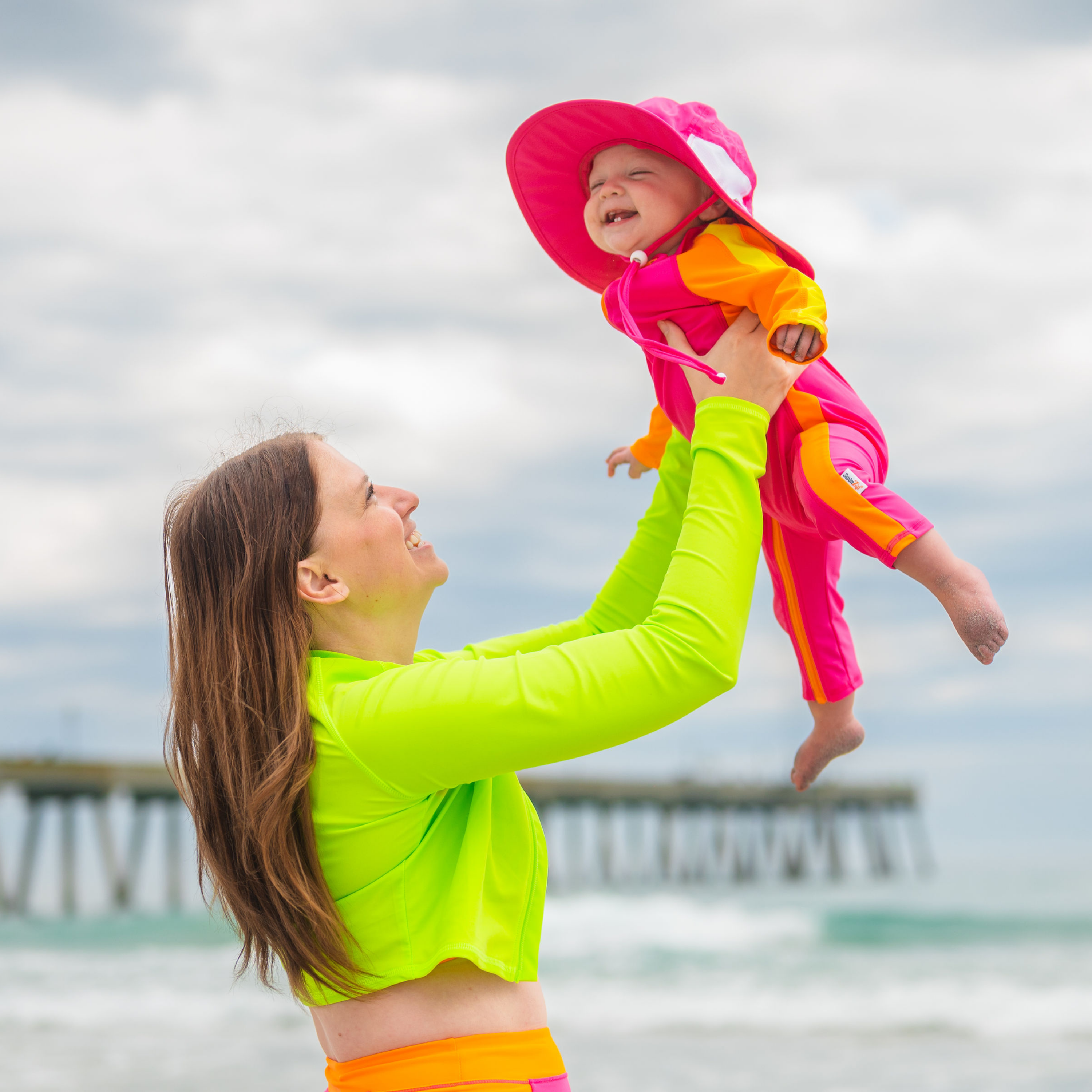
Neon swimsuits for boys keep them visible in crowded water environments, and playful prints (sharks, lobsters, tropical patterns) get approval from picky toddlers who want a say in what they wear. Add a wide-brim sun hat for kids to cover faces, ears, and necks.
👨👦 Match your toddler's swimwear with dad's through our father-son matching swim trunks collection.
Toddler boy UPF 50+ swimwear FAQ
How should a toddler's rash guard fit?
A rash guard for toddlers should fit snugly, without restricting movement. You should be able to slide two fingers under the fabric at the chest. Excess fabric creates gaps where UV rays reach the skin and creates drag in water.
Can my toddler wear a regular t-shirt instead of a rash guard?
A cotton t-shirt provides only UPF 5–10, drops lower when wet, gets heavy in water, and takes a long time to dry. A UPF 50+ rash guard blocks 98% of UV rays wet or dry, dries in minutes, and stays lightweight in the pool. The protection difference is significant, and you should definitely choose a rash guard in any situation where sun protection matters.
🏄 Learn about rash guards and what makes them so good at sun protection.
Is UPF 50+ swimwear hot to wear in summer?
UPF 50+ swim fabrics are lightweight and breathable. They feel cooler against the skin than a standard cotton t-shirt because they dry faster and don't trap heat when wet. Most toddlers tolerate long-sleeve rash guards comfortably in temperatures above 90°F. If your toddler runs hot, look for lighter colors, which absorb less solar heat than dark fabrics.
Can my toddler wear UPF 50+ swimwear as regular clothing?
UPF 50+ rash guards and swim shirts double as sun protection for any outdoor activity, not just swimming. Many parents use them for playground trips, hiking, outdoor birthday parties, and backyard play. The quick-dry fabric handles sweat the same way it handles pool water, and the sun protection works the same on dry land.
What colors are safest for toddler swimwear?
Bright, neon swimwear (yellow, green, orange, pink) provides the highest visibility in and around water. Dark colors like navy and black can be difficult to see underwater, which is a safety concern for toddlers near pools, lakes, and oceans.
Read our full guide on swimsuit colors to avoid for kids.
Further reading
Rash guard vs. swimsuit for a baby
What swimwear should a one-year-old wear?


Leave a comment
This site is protected by hCaptcha and the hCaptcha Privacy Policy and Terms of Service apply.